 Your Prosthetic Care Journey
Receiving a prosthesis can feel overwhelming, especially for children and families. At Great Lakes Orthopedic Labs, we focus on making the process clear, supportive, and personalized. Every step is guided by an experienced prosthetic practitioner and follows nationally recognized care standards.
Our goal is to create a prosthesis that fits comfortably, functions well, and supports independence at home, school, and in the community.
Step 1: Initial Evaluation and Getting to Know You
The journey begins with a one-on-one evaluation with a certified prosthetic practitioner. This visit is focused on understanding the individual, not just the limb.
During this visit, we talk about daily activities, goals, comfort concerns, and what matters most to the child and family. We also assess strength, movement, balance, skin condition, and overall mobility.
This comprehensive evaluation helps determine the most appropriate prosthetic design and ensures medical necessity is clearly documented.
Step 2: Shape Acquisition (Casting or Digital Scanning)
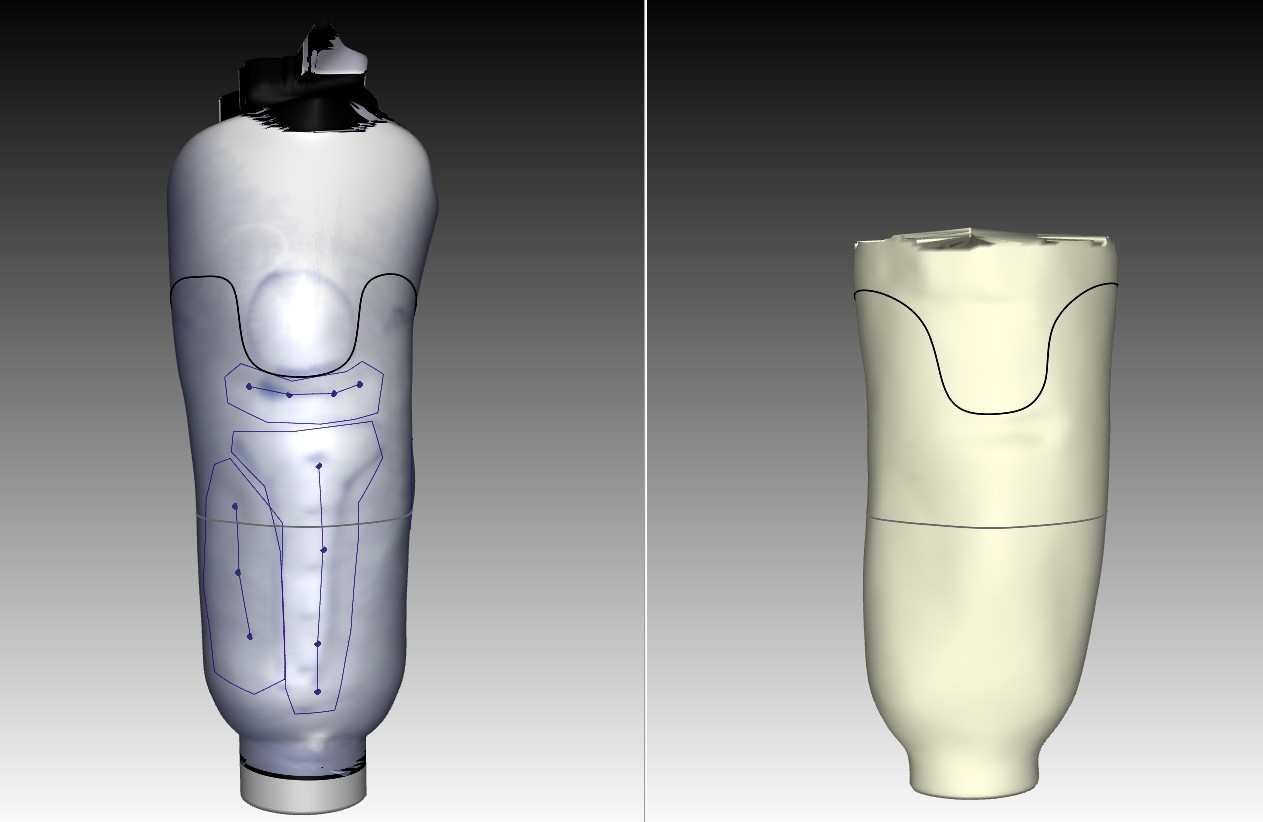
Once a prosthetic plan is established, we capture the shape of the residual limb. This is a critical step that directly affects comfort and function.
Shape acquisition is performed directly by the practitioner using either hands-on casting techniques or advanced digital scanning. The limb is carefully positioned to reflect how it will function during daily activities.
Practitioner-controlled casting or scanning allows for precise shaping, pressure relief, and alignment from the very beginning.
Step 3: Diagnostic Prosthetic Fitting (Test Socket)
Before making the final prosthesis, a diagnostic (test) socket is often created. This allows us to check fit, comfort, and alignment without committing to a permanent design too early.
When appropriate, the diagnostic socket may be produced using 3D printing technology. This allows for efficient testing and easy modification.
Diagnostic fittings help ensure the final prosthesis is safe, comfortable, and functional before definitive fabrication.
Step 4: Trial Use, Adjustments, and Family Feedback
During the diagnostic phase, the child may walk, stand, or perform age-appropriate activities while the practitioner evaluates comfort, alignment, and movement.
Families are encouraged to share feedback. If something feels uncomfortable or looks off, adjustments are made.
This step ensures that concerns are addressed early and that the prosthesis truly supports real-life use.
Step 5: Definitive Prosthetic Fabrication
Once the diagnostic fit is successful, the definitive prosthetic socket is fabricated using durable materials selected for the child’s activity level and needs.
Final alignment, finishing, and cosmetic details are completed with care to ensure comfort, function, and appearance.
Using a diagnostic fitting phase helps improve long-term comfort and confidence in the final prosthesis.
Step 6: Final Fitting and Education
At the delivery appointment, the prosthesis is carefully fitted and checked. We review how to put it on, take it off, and monitor skin health.
Families receive clear, simple instructions and are encouraged to ask questions.
Education and safety are essential parts of successful prosthetic use.
Step 7: Follow-Up Care and Growth Monitoring
Follow-up visits are scheduled to monitor fit, comfort, and function. For children, growth and activity changes are expected and planned for.
Adjustments are made as needed to accommodate growth, activity level, or changes in limb volume.
Ongoing follow-up is a key part of prosthetic care and supports long-term success.
A Supportive, Family-Centered Approach
At Great Lakes Orthopedic Labs, prosthetic care is not a single appointment—it’s a relationship. We work closely with physicians, therapists, families, and caregivers to support each child’s progress.
Our approach follows professional standards while remaining compassionate, patient-focused, and easy to understand.
Great Lakes Orthopedic Labs
1031 Main Street, Buffalo, NY 14203
Phone: 716-893-4116